
What is a Dock Leveler? Understanding Everything in One Article
# What is a Dock Leveler? Understanding Everything in One Article
## Preface: The Daily "Docking Gap" Crisis
Imagine this scenario: A fully loaded truck backs into a loading dock. The driver opens the trailer door, only to find the trailer floor is a full 30 centimeters higher than the warehouse floor.
At this moment, the warehouse manager faces three choices:
1. Have workers manually handle the goods, reducing efficiency by 70% and increasing the risk of workplace injury by 300%.
2. Temporarily use steel plates to create a makeshift ramp, requiring adjustments each time and posing a slipping hazard.
3. Send the truck to find another dock, disrupting the entire dispatch schedule.
This seemingly small "height gap" is, in reality, **daily consuming company profits, threatening worker safety, and undermining supply chain efficiency**.
The key to solving this problem is the star of today's detailed introduction—the **Dock Leveler**.
---
## Part 1: Core Understanding - What Exactly is a Dock Leveler?
### 1.1 A One-Sentence Definition
A dock leveler is a **specially designed adjustable bridge device installed at warehouse loading dock openings**. It creates a safe, smooth connecting passage between the warehouse floor and the truck/trailer bed, allowing forklifts and goods to pass through seamlessly.
However, it is **not simply a steel plate ramp**. It is a professional piece of equipment integrating mechanical, hydraulic, and safety systems.
### 1.2 Its Two Core Roles
**Role One: Safety Guardian**
- Prevents forklifts from falling off the dock edge (a leading cause of major accidents in warehousing).
- Prevents workers from slipping and injuring themselves while climbing ramps.
- Reduces cargo damage during loading/unloading.
**Role Two: Efficiency Multiplier**
- Shortens loading/unloading time by 40%-60%.
- Allows one forklift to do the work previously requiring 2-3 people.
- Reduces truck waiting time and increases dock throughput.
### 1.3 Specific Problems It Solves
| Problem Type | Specific Manifestation | Dock Leveler's Solution |
|---|---|---|
| **Height Mismatch** | Different truck/trailer models, varying loads cause fluctuating bed heights. | Adjustable height, automatically compensating for differences. |
| **Safety Risks** | Forklift falls, personnel slips, cargo slides. | Fall-prevention legs, anti-slip surface, safety locks. |
| **Low Efficiency** | Slow manual handling, constant ramp adjustments. | One-time setup, usable all day. |
| **Wasted Space** | Low dock utilization. | Fast loading/unloading, increases throughput. |
| **Cargo Damage** | Jostling, impacts. | Smooth transition, reduces shock. |
---
## Part 2: Deep Dive - How Does a Dock Leveler Work?
### 2.1 Complete Work Cycle (6 Steps)
Let's follow a complete loading/unloading process to understand the dock leveler's operation:
**Step ① Preparation Stage**
The dock leveler is in the "home" or "stored" position. The deck is flush with the warehouse floor, and the front lip is retracted. It occupies no space, allowing safe passage for people and vehicles.
**Step ② Truck/Trailer Docking**
The truck backs into the dock, its rear wheels contacting the wheel chocks or vehicle restraint (if installed). The driver doesn't need pinpoint precision due to sufficient tolerance.
**Step ③ Activation & Adjustment**
The operator presses a button or pulls a handle, initiating the leveler's action:
1. The rear of the deck lifts slightly (via spring or hydraulic power).
2. The front lip automatically extends, resting on the truck/trailer bed.
3. The system automatically senses the height difference and fine-tunes to the optimal angle.
**Step ④ Safety Locking**
- **Fall-prevention legs automatically deploy**: If the truck accidentally pulls away, the legs instantly support the deck.
- **Lip safety locks engage**: Ensure the lip is securely latched onto the trailer edge.
- **Deck position self-locks**: Locks in place once adjusted, preventing unintended movement.
**Step ⑤ Loading/Unloading Operations**
Forklifts can travel safely and smoothly between the warehouse and the truck. The deck remains stable even under full load.
**Step ⑥ Operation Completion & Reset**
After loading/unloading:
1. Operator presses the "reset" button.
2. The lip retracts, and the deck lowers to the horizontal position.
3. Passage functionality is restored, ready for the next use.
### 2.2 Two Main Drive Types
**Mechanical Spring Type**
- **Working Principle**: Uses the force of heavy-duty springs to lift the deck.
- **Advantages**: Simple structure, low maintenance cost, no electricity required.
- **Best For**: Medium-frequency use, budget-conscious small to medium warehouses.
**Hydraulic Type**
- **Working Principle**: Uses hydraulic cylinders to provide lifting power.
- **Advantages**: Smoother operation, more precise adjustment, higher load capacity.
- **Best For**: High-frequency use, heavy-duty operations in large logistics centers.
### 2.3 Three Essential Safety Devices You Must Know
**① Fall-Prevention Legs (Support Legs)**
This is the most critical safety feature. When the leveler is in the working position, these legs automatically extend. If the truck unexpectedly drives away, the legs immediately catch and support the deck, preventing forklifts and personnel from a dangerous fall.
**② Truck/Trailer Restraint System**
A device installed on the dock approach. The truck's rear wheels are captured when backing in, preventing the vehicle from moving during operations. Some advanced systems integrate with the leveler—the leveler won't activate unless the truck is properly restrained.
**③ Lip Safety Lock**
Ensures the extended lip is firmly secured to the trailer edge and won't slide or bounce when forklifts pass over it.
---
## Part 3: Key Parameters - How to Understand Technical Specifications?
### 3.1 Size Parameters: Matching Your Needs
**Deck Width**
- Standard Range: 1.8 meters - 3.0 meters (6 ft - 10 ft).
- **Selection Advice**: 30-50 cm (12-20 inches) wider than your widest forklift. For a typical 2-meter wide forklift, a 2.5-meter deck is safer.
**Deck Length**
- Standard Range: 2.0 meters - 3.5 meters (6.5 ft - 11.5 ft).
- **Key Consideration**: Sufficient length ensures a gentle transition. Heavier forklifts or steeper grades require longer decks to reduce the angle.
**Leveling Range**
- One of the most important parameters.
- Indicates the height difference the leveler can compensate for.
- Typical Range: ±30 cm (±12 inches) from the dock floor.
- **How to Check**: Measure the bed height of all truck types that might visit your facility. Use the maximum and minimum values.
### 3.2 Load Capacity: Two Key Concepts
**Dynamic Load**
- **Definition**: The maximum allowed weight **while a forklift is driving across** the deck.
- **Calculation**: Forklift weight + Maximum load capacity + Safety Factor (typically x1.25).
- **Example**: If a forklift weighs 2 tons and carries 3 tons, you need a minimum dynamic load capacity of (2+3) x 1.25 = 6.25 tons.
**Static Load**
- **Definition**: The maximum allowed weight **when cargo is stationary on** the deck.
- Usually significantly higher than dynamic load.
- Consideration: For scenarios like temporarily stacking goods on the deck.
### 3.3 Adjustment Speed & Precision
**Cycle Time**
- The time to go from fully stored to fully operational position.
- Good Equipment: Completes the full cycle in 15-25 seconds.
- If over 30 seconds, it may impact operational efficiency.
**Height Retention Precision**
- Whether the deck settles or sinks under heavy load once positioned.
- Quality Equipment: Settles no more than 5 mm under full load.
- This directly affects the smoothness of forklift travel.
---
## Part 4: Main Types: More Than One Choice
### 4.1 Comparison of Three Mainstream Types
| Type | Installation Method | Core Features | Best Application Scenarios | Investment Cost |
|---|---|---|---|---|
| **Pit-Style Dock Leveler** | Installed into a pre-built pit in the dock face. | Highest performance, most stable, deck is completely flush with warehouse floor. | New construction, high-frequency/heavy-duty use,追求最高效率 (pursuing maximum efficiency). | High (includes pit construction). |
| **Flush-Mount Dock Leveler** | Mounts directly onto the warehouse floor at the dock face. | No pit needed, flexible installation, easy retrofit. | Retrofit of existing facilities, leased spaces, limited budget. | Medium. |
| **Mobile Dock Leveler** | Portable, for temporary use. | Flexible deployment, can be shared among docks, lowest investment. | Temporary loading points, seasonal operations, backup solution. | Low. |
### 4.2 Special Application Types
**Cold Storage / Freezer Specific**
- Special sealing designs to minimize cold air loss.
- Low-temperature resistant materials and lubrication systems (operational at -30°C).
- Anti-icing features to ensure reliable operation in freezing environments.
**Container Loading/Unloading Specific**
- Extra-long lip design to reach inside shipping containers.
- Greater leveling range to accommodate the height variation of container chassis.
- Reinforced structure to handle heavy loads from sea containers.
**Explosion-Proof / Hazardous Environment**
- Fully mechanical design, no electrical components.
- Special anti-static and spark-proof treatments.
- Essential for chemical, oil & gas, and other hazardous material warehouses.
---
## Part 5: How to Start Selecting the Right Model for Your Site?
### 5.1 Five Self-Assessment Questions Before Contacting Suppliers
Before reaching out to vendors, answer these five questions:
1. **What is the usage frequency?**
- How many truckloads per day?
- How many simultaneous operations during peak hours?
2. **What are the primary vehicles involved?**
- Forklift models, dimensions, load capacities?
- Common truck/trailer types and their bed height ranges?
3. **What are the site conditions?**
- Is it new construction or a retrofit project?
- What is the floor load-bearing capacity?
- Is there sufficient space for installation?
4. **What is the budget range?**
- Equipment budget?
- Installation and construction budget?
- Long-term maintenance budget?
5. **Are there any special requirements?**
- Explosion-proof needed?
- Extreme temperature environment?
- Special cargo types (e.g., corrosive, fragile)?
### 5.2 Selection Decision Flowchart
```
Start
├→ New Warehouse Construction → Prioritize Pit-Style (Best Performance)
├→ Existing Warehouse Retrofit → Assess if a Pit Can Be Built
│ ├→ Pit Can Be Built → Pit-Style
│ └→ Pit Cannot Be Built → Flush-Mount
├→ Low Usage Frequency / Limited Budget → Mobile Dock Leveler
└→ Special Environment (Cold Storage, Explosive) → Dedicated Models
```
### 5.3 Importance of Professional Assessment
**Don't Decide on Your Own!** Dock leveler selection requires professional assessment because:
1. **Safety & Compliance Requirements**
- Different countries and regions have varying safety standards.
- Incorrect selection may lead to failure to pass safety inspections.
2. **Hidden Costs**
- Underestimating load requirements → Premature equipment failure → High repair costs.
- Choosing the wrong type → Installation costs double → Exceeding budget.
- Neglecting maintenance needs → Frequent breakdowns → Production downtime losses.
3. **Long-Term Operational Costs**
- Energy efficiency differences: Good equipment can save 30% on energy.
- Maintenance intervals: Higher-quality equipment requires less frequent maintenance.
- Service life: Correct selection can extend usable life by 5-10 years.
**Recommended Approach**: Invite 2-3 professional suppliers for on-site surveys to provide detailed proposals and quotes for comparison.
---
## Part 6: Common Misconceptions vs. The Truth
### Misconception 1: "A dock leveler is just a thick steel plate."
**The Truth**: Modern dock levelers are precision equipment containing dozens of精密部件 (precision components): hydraulic systems, sensors, safety devices, control systems, etc. Their technological sophistication is comparable to construction machinery.
### Misconception 2: "The cheaper, the better the deal."
**The Truth**: Dock levelers have "operating costs" far exceeding their "purchase cost." A cheap leveler might:
- Consume thousands of extra kilowatt-hours of electricity annually.
- Require more frequent repairs (with greater losses per downtime event).
- Have a shorter service life, potentially needing replacement in 5 years.
### Misconception 3: "Once installed, you can forget about it."
**The Truth**: Dock levelers require regular maintenance, just like a car. Recommended maintenance schedule:
- **Daily**: Visual inspection, clear debris.
- **Monthly**: Lubricate moving parts, check bolts.
- **Semi-Annually**: Professional inspection, adjustment, and calibration.
- **Annually**: Comprehensive overhaul, replace worn parts.
### Misconception 4: "All brands are pretty much the same."
**The Truth**: Significant differences exist between brands in key technologies:
- Core component materials (steel grade, hydraulic component brands).
- Compliance with safety standards (ANSI/OSHA certification).
- Energy efficiency design (energy-saving hydraulic systems can reduce electricity use by 40%).
- Level of智能 (intelligence) (IoT monitoring, predictive maintenance capabilities).
---
## Part 7: Future Trends: The Intelligent Development of Dock Levelers
### 7.1 Internet of Things (IoT) Integration
- **Real-time Monitoring**: Remotely view equipment status, usage data.
- **Predictive Maintenance**: System automatically alerts when maintenance is due, preventing unexpected failures.
- **Usage Analytics**: Statistics on each dock's efficiency for optimized scheduling.
### 7.2 Automation & Robotics Integration
- **Automatic Positioning Systems**: Guide trucks to the precise spot when backing in.
- **Robotic Handling Integration**: Leveler automatically adjusts height to accommodate robotic operations.
- **Unmanned Operation**: Interfaces with Warehouse Management Systems (WMS) for fully automated scheduling.
### 7.3 Energy Efficiency & Sustainability
- **Energy Recovery Systems**: Capture energy during deck descent for use in the next ascent.
- **Solar Power Supply**: Provides clean energy for the leveler's electrical components.
- **Long-Life Design**: Modular design allows individual replacement of major components, extending overall machine life.
---
## Conclusion: Dock Leveler - The "Silent Foundation" of Modern Logistics
The dock leveler might be one of the most inconspicuous pieces of equipment in a warehouse—it doesn't move goods, store products, or manage inventory. Yet, it is **a crucial link in the entire logistics chain**.
A quality dock leveler:
- **Safeguards** operator safety.
- **Protects** the integrity of every shipment.
- **Enhances** overall warehouse efficiency.
- **Supports** the smooth operation of your enterprise's supply chain.
When selecting a dock leveler, remember: You are not just purchasing a piece of equipment; you are **investing in safety, efficiency, and long-term operational stability**.
---
## Next Steps & Actionable Advice
### If You Are Planning a New Warehouse
Contact professional suppliers immediately to incorporate dock levelers into the overall design. Early planning can save over 30% in total project costs.
### If You Need to Upgrade Existing Facilities
Invite professional engineers for an on-site assessment to obtain:
1. A condition report on your existing equipment.
2. Upgrade options suitable for your needs.
3. A detailed Return on Investment (ROI) analysis.
### If You Have Specific Questions
Feel free to leave a comment below or contact our technical team directly. With over 20 years of industry experience, we have provided loading/unloading solutions for hundreds of warehouses worldwide.
**Remember**: The correct dock leveler choice will continue creating value for your business for the next 5-10 years. Investing time in proper research and planning now lays the strongest foundation for future efficient operations.
---
*This article is based on general industry knowledge and technical standards. Consult a professional engineer for specific selection. All data is for reference only; actual requirements may vary depending on specific circumstances.
 Dock Leveler Explained with Diagram: Understand Its Core Structure and Basic Definition at a Glance
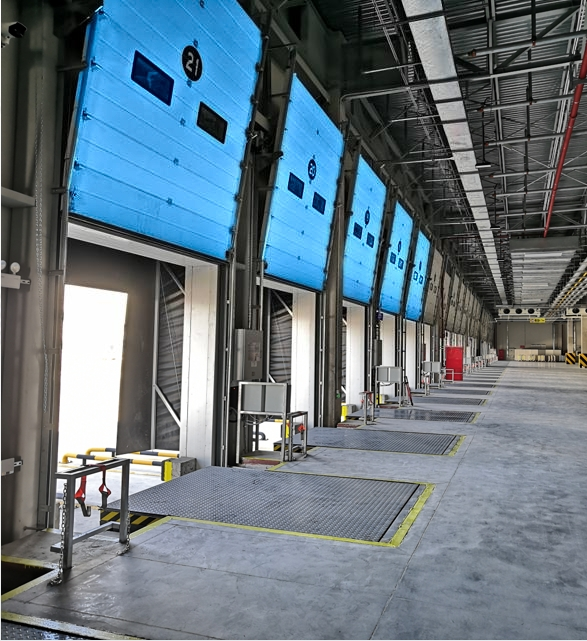 Core Analysis of the Dock Leveler: How Did It Become Synonymous with Safety and Efficiency?
 From Definition to Value: Why Dock Levelers Are the Invisible Backbone of Modern Logistics